solution

GUEST ROOM MANAGEMENT SYSTEM
Guest Room Management System

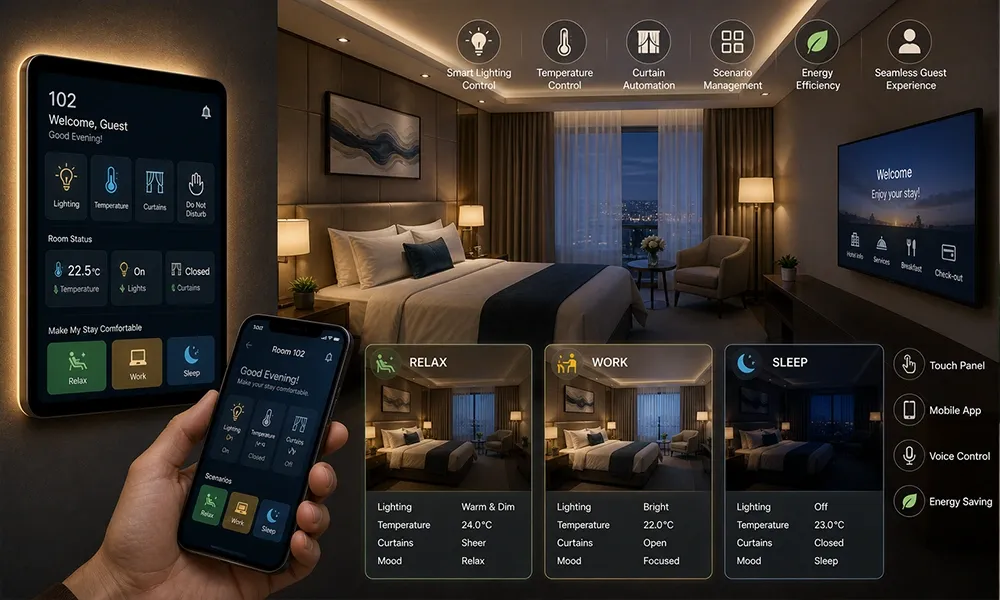
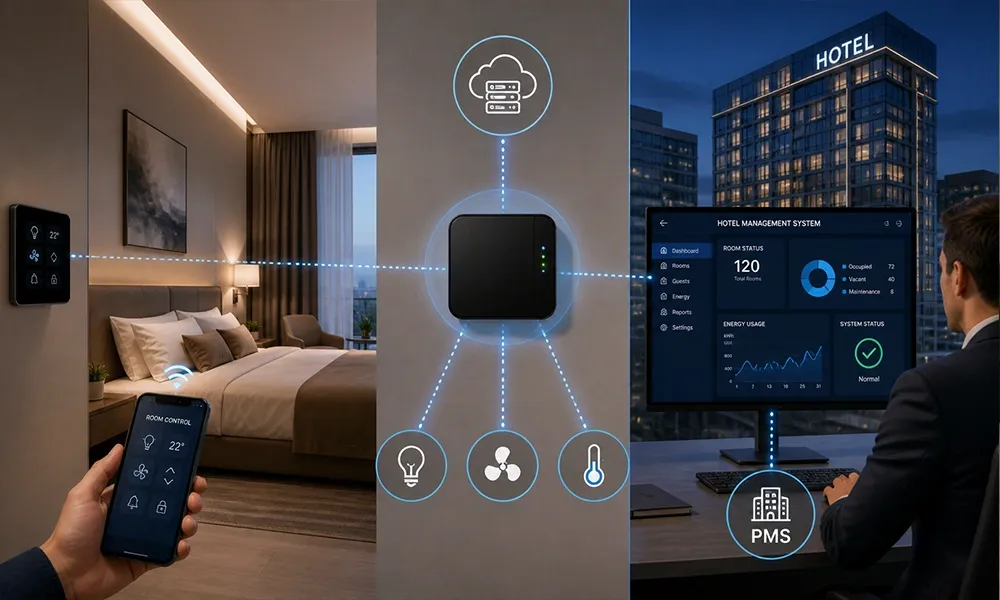
Transform every stay into a smart, personalized experience with our advanced GRMS solutions. From automated room controls to seamless system integration, empower your hotel to deliver superior comfort, reduce energy consumption, and streamline operations effortlessly.

Smart Guest Room Management for Modern Hotels

Enhanced Guest Experience & Smart Room Control

MSHRIY’s (GRMS)guest room management system improves guest experience and provides hoteliers with easy management through MSHRIY guest room solutions. The system manages different scenarios in each room, including living room, living room and bedroom settings. Lighting, temperature and curtains can be adjusted depending on the activity of the residents.

Enhanced-Guest-Experience-Smart-Room-Control
Centralized-Management-Seamless-Integration

Centralized Management & Seamless Integration

Settings can be changed in the room by the guest or centrally via the hotel management system. The Legrand guest room management system can be integrated into any building or property management system “PMS”. to reduce operating costs and increase building efficiency. MSHRIY’s space management system offers an integrated approach that connects the space to a central control system.

solution

HVAC & PLANT CONTROL

HVAC & Plant Control

Advanced HVAC and plant control solutions designed to optimize performance, efficiency, and reliability. Monitor and manage your mechanical systems in real-time with intelligent automation, ensuring consistent comfort, reduced energy consumption, and seamless operational control.

Advanced DDC Controllers for Smart Building Automation

Advanced DDC Controllers for Smart Buildings

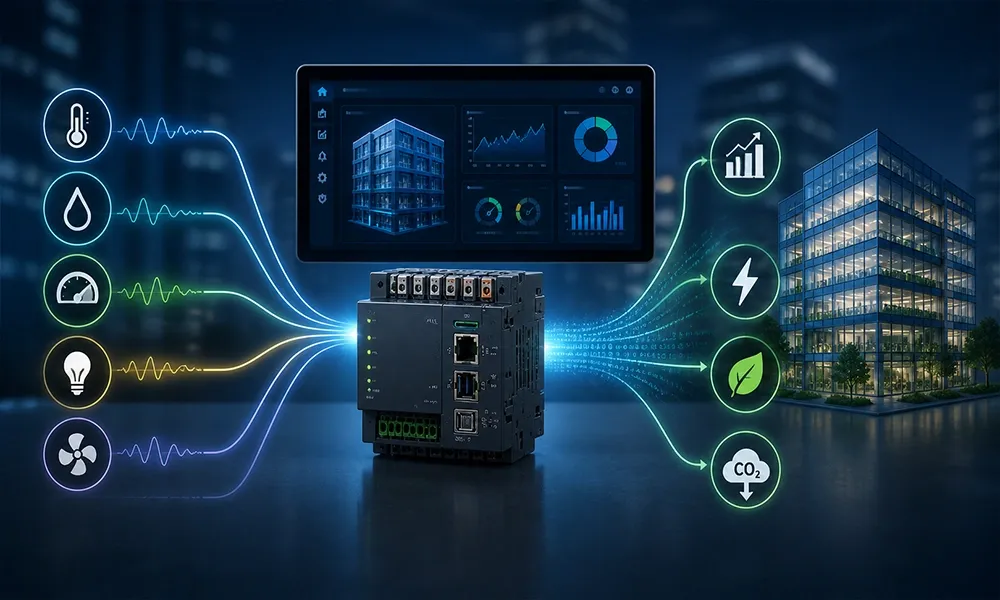
DDC (Direct Digital Control) Controllers are at the forefront of modern building automation, and the Contents MSHRIY Advanced Application Controllers exemplify this trend. These controllers are purposefully designed to offer advanced control and seamless integration within your building’s systems.

Advanced-DDC-Controllers-for-Smart-Buildings
Digital-Precision-Energy-Optimizations

Digital Precision & Energy Optimization

One of their key functions is to digitalize processes within the building. They adeptly convert analog signals into digital data, allowing for precise and efficient control of various technological processes. These advanced controllers utilize cutting-edge algorithms to manage building systems, resulting in significant reductions in energy consumption and greenhouse gas emissions. By optimizing energy usage and enhancing operational efficiency, they not only contribute to cost savings but also align with sustainability goals.

Open Protocols & Future-Ready Integration

Moreover, these controllers support open communication protocols, which serve as an essential element for future-proofing your building. In an era of rapid technological advancements, having a system that can adapt and integrate with emerging technologies ensures your building remains efficient and competitive over time.

Open-Protocols-Future-Ready-Integration
Efficient-Sustainable-Scalable-Solutions

Efficient, Sustainable & Scalable Solutions

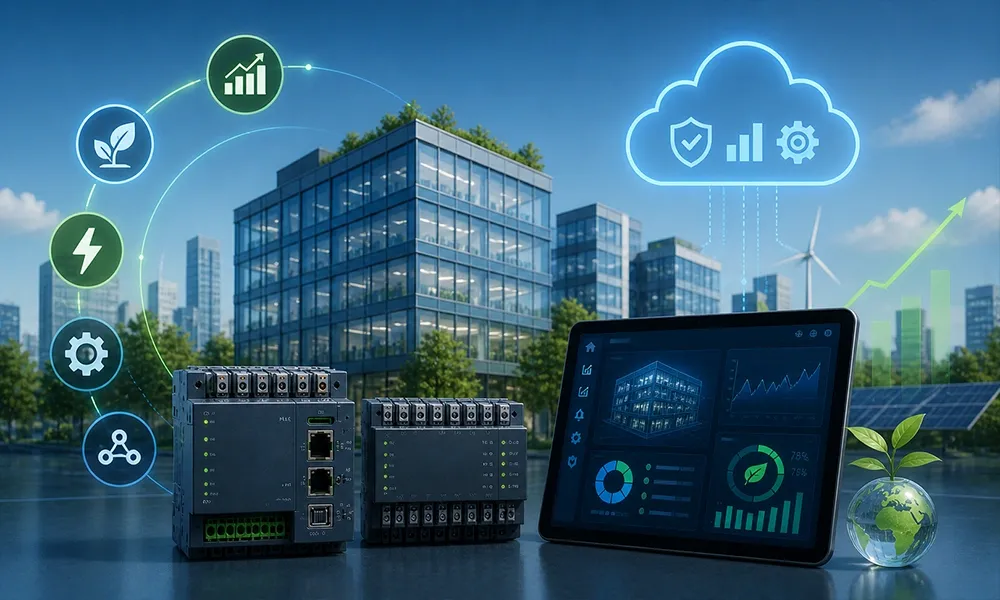
In essence, Contents MSHRIY Advanced Application Controllers represent a forward-thinking solution for modern building management. They combine digitalization, energy efficiency, and adaptability, making them a valuable asset for optimizing your building’s performance and sustainability while keeping it prepared for the challenges of the future.

solution

COMFORT MANAGEMENT

Comfort Management

Enhance occupant comfort with intelligent climate control solutions designed for modern buildings. Our comfort management systems ensure optimal temperature, air quality, and energy efficiency through real-time monitoring and automated adjustments, creating a healthier and more productive indoor environment.

Smart Comfort Management for Modern Buildings

Balanced Comfort & Energy Efficiency

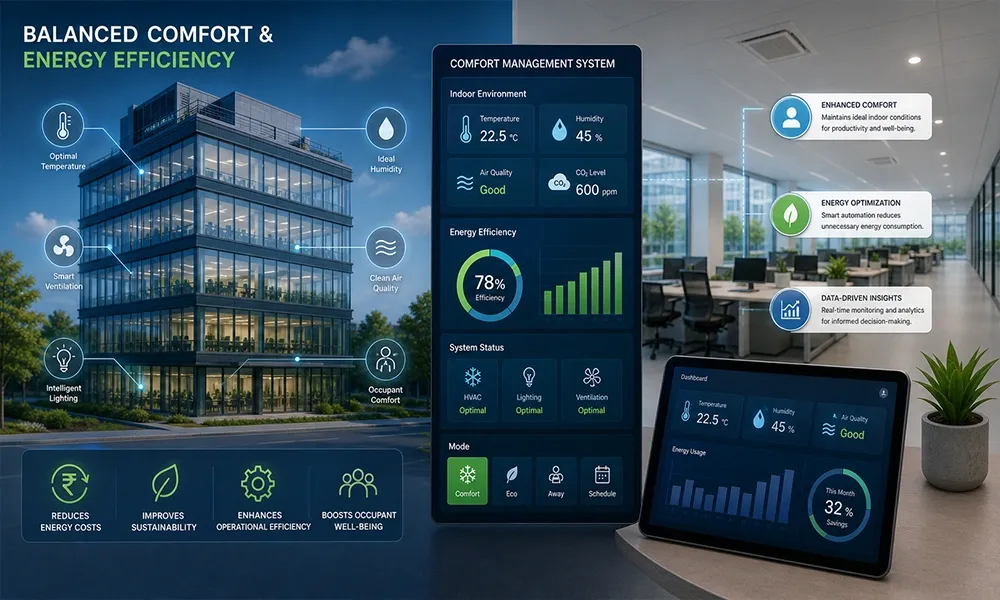
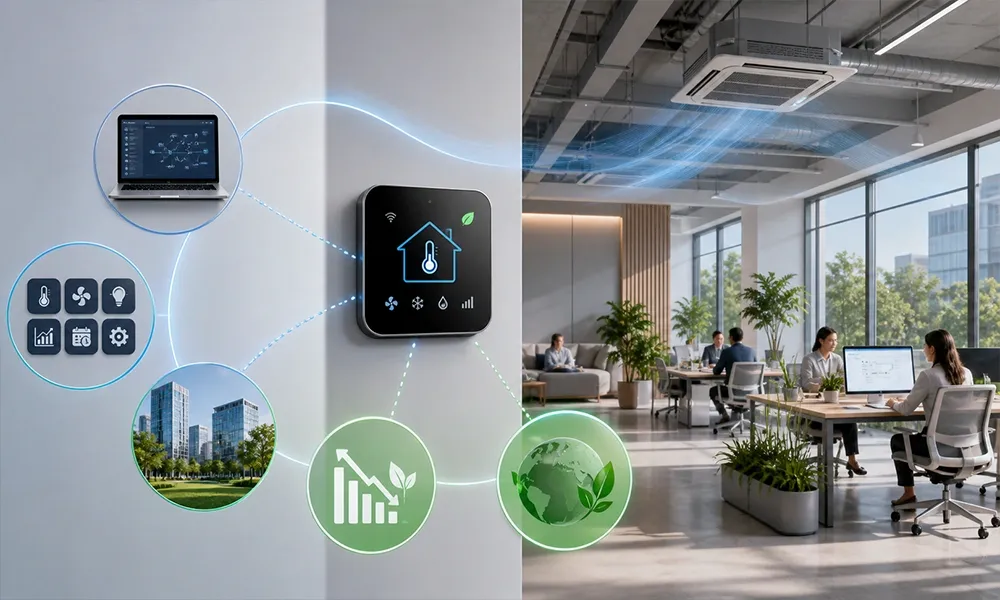
In the realm of commercial building management, achieving a harmonious balance between occupant comfort and energy efficiency is paramount. The MSHRIY Comfort Management Solution offers a sophisticated approach to this challenge, providing integrated comfort management that not only reduces energy costs but also ensures an optimal indoor environment.

Balanced-Comfort-Energy-Efficiency
Flexible-Scalable-Climate-Control

Flexible & Scalable Climate Control

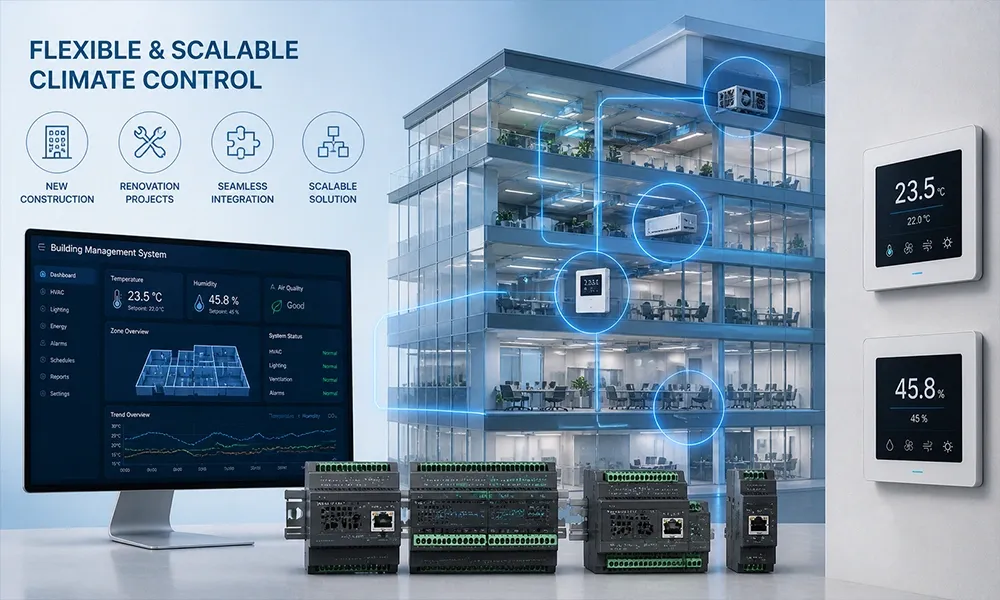
This solution places you in command of your building’s climate control. Its versatile array of configurable and programmable controllers, combined with sleek, contemporary wall panels, seamlessly integrates into both new construction projects and renovation endeavors. This adaptability ensures that the system can be harmoniously incorporated into virtually any architectural design.

Customizable Comfort Solutions

Whether you opt for the convenience of ready-made control applications or prefer to craft your own custom control algorithms, the result is the same: enhanced comfort for building occupants, a notable reduction in energy consumption, and a substantial decrease in greenhouse gas emissions. The system’s ability to tailor climate control to specific needs not only fosters a pleasant and productive indoor environment but also contributes significantly to your sustainability goals.

Customizable-Comfort-Solutions
Sustainable-Future-Ready-Comfort-Management

Sustainable & Future-Ready Comfort Management

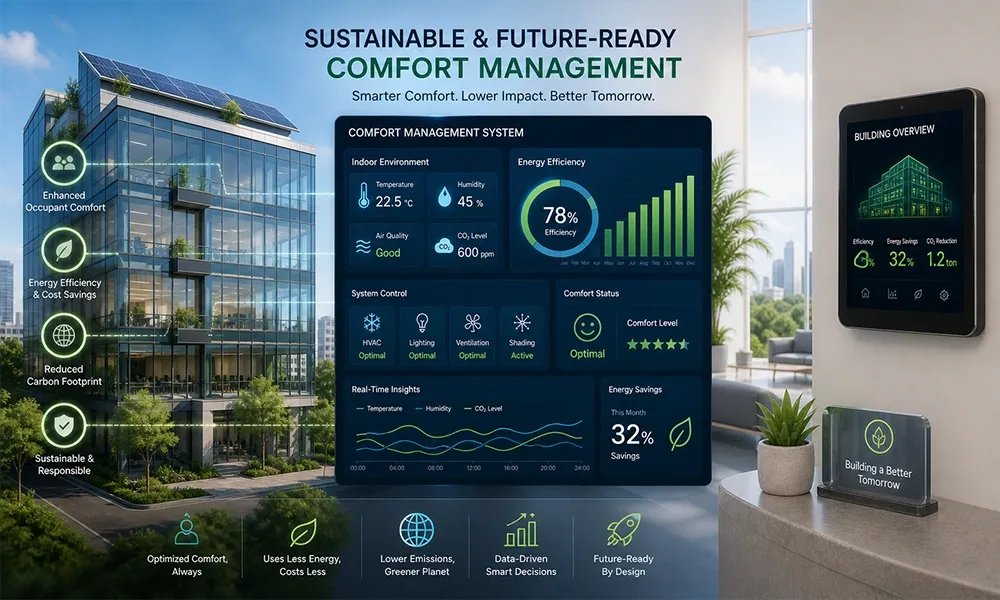
In summary, the MSHRIY Comfort Management Solution is a forward-thinking approach to commercial building management that optimizes comfort while simultaneously promoting energy efficiency and environmental responsibility. It represents a strategic investment that benefits both your occupants and the planet.

solution

SMALL & MEDIUM BMS

Small & Medium BMS

Cloud-enabled Building Management Systems (BMS) designed for small and medium-sized facilities, powered by the Niagara Framework. Gain real-time visibility, centralized control, and seamless integration of your building systems to improve efficiency, reduce operational costs, and enhance occupant comfort.

Smart, Scalable & Efficient Building Management

Smart Cloud-Based Building Control

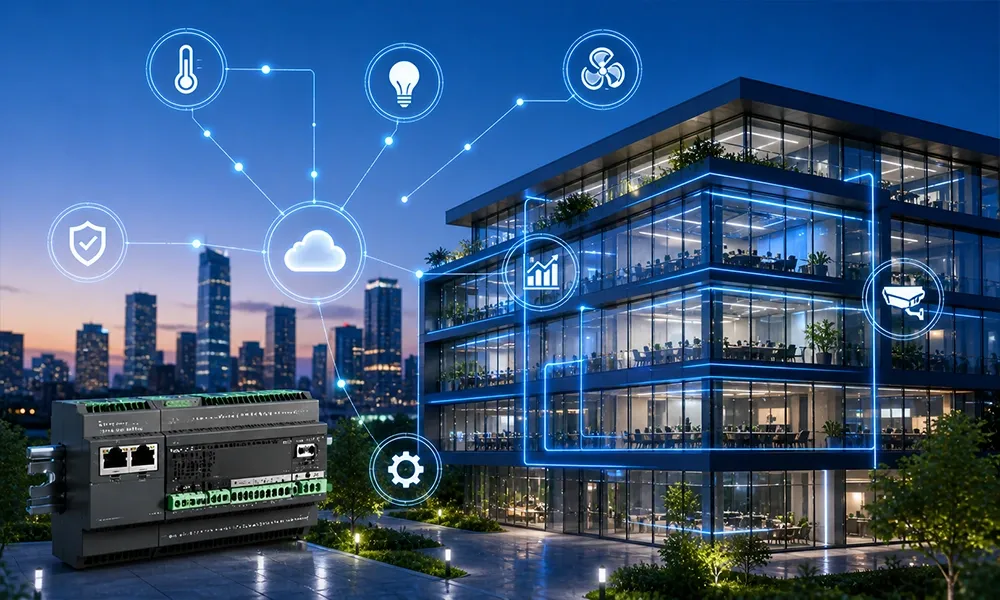
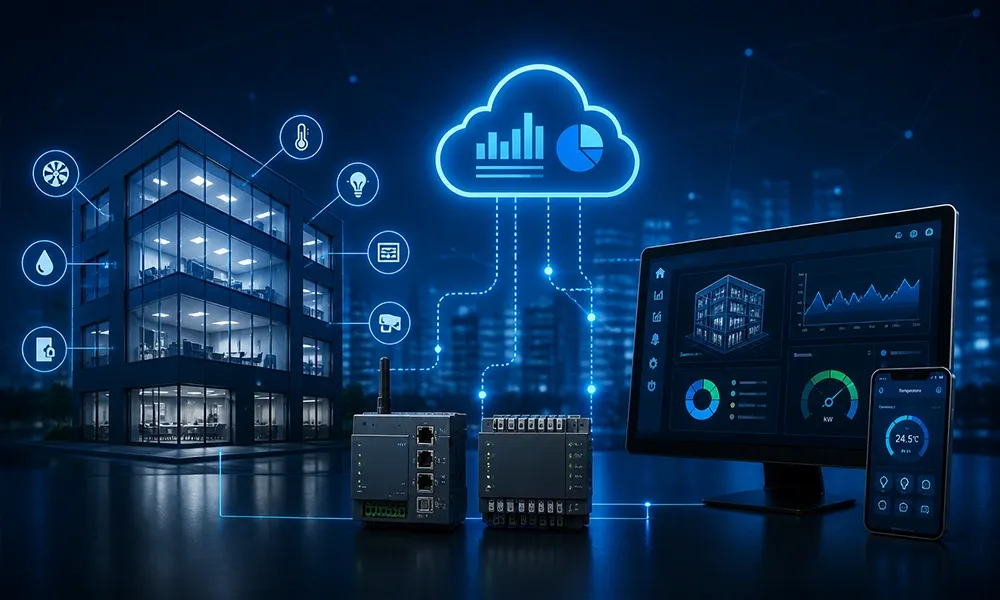
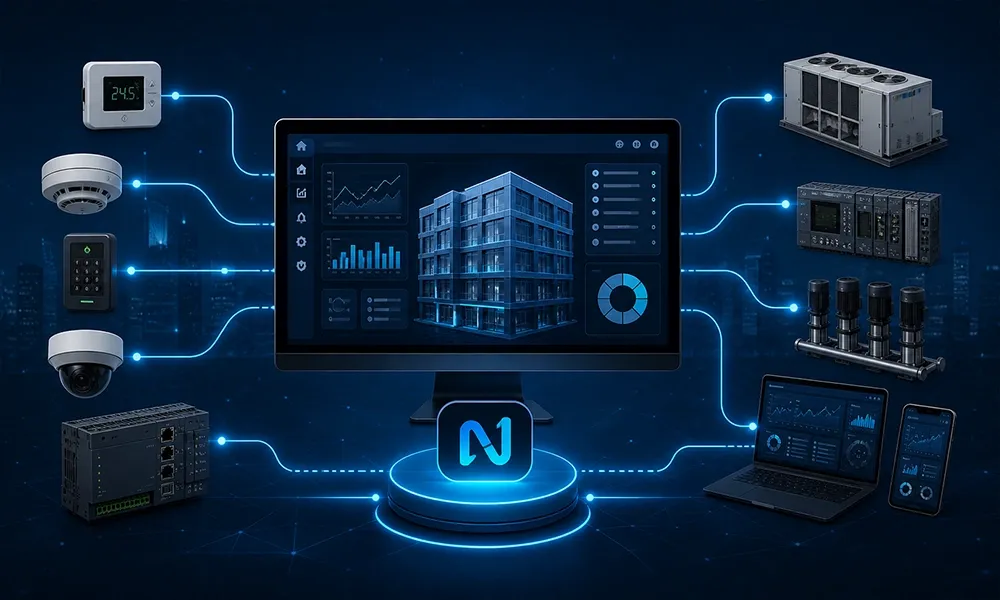
Cloud-enabled controllers, driven by the Niagara Framework and equipped with Human Machine Interfaces (HMIs), offer a powerful solution tailored for small to mid-sized buildings. This innovative approach opens the door to scalable solutions that provide comprehensive control, process visualization, and energy management.

Smart-Cloud-Based-Building-Control
Reduce-Energy-Costs-with-Data-Insights

Reduce Energy Costs with Data Insights

One of the most significant advantages is the ability to reduce energy costs through precise control and data-driven insights. With cloud-enabled controllers and HMIs, you gain real-time visibility into energy usage, enabling you to make informed decisions that lead to substantial savings.

Flexible & Powerful Niagara Framework

The Niagara Framework, known for its open and flexible nature, serves as the core software platform for building automation. It seamlessly integrates various devices, allowing you to harness the full potential of integration, visualization, and Internet of Things (IoT) connectivity. This means you can efficiently monitor and manage your building systems from a centralized platform, ensuring optimal user comfort while extending the lifespan of your facility.

Flexible-Powerful-Niagara-Framework
Future-Ready-Sustainable-Buildings

Future-Ready & Sustainable Buildings

By adopting this forward-looking technology, you’re not just improving your building’s efficiency; you’re also actively shaping the modern future of your facilities. In a world where sustainability and smart buildings are becoming increasingly important, embracing these solutions positions your organization for long-term success.

solution

MULTI-SITE BUILDING MANAGEMENT

Multi-Site Building Management

Manage multiple facilities through advanced IoT-based platforms that integrate all systems into a single, scalable interface. With secure remote access, cloud connectivity, and real-time data, you can monitor performance, optimize energy usage, and identify issues proactively. This data-driven approach improves efficiency, reduces downtime, and lowers operational costs across all sites.

Innovative Solutions in Multi-Site Building Management

To address these challenges, organizations are adopting innovative solutions:

Multi-Site Building Management

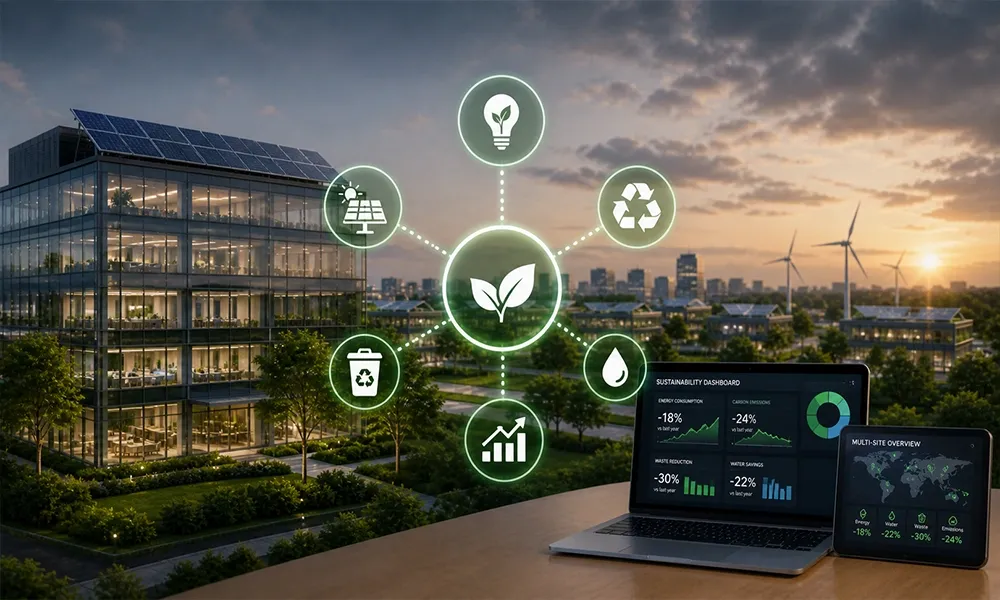
Take charge of your building management using cutting-edge Internet of Things (IoT) software platforms. These platforms empower you to seamlessly integrate various vendors into a single, easily manageable, and scalable system, all while ensuring secure remote access. Leveraging the capabilities of cloud computing and real-time data processing from multiple locations, you can elevate your buildings to unprecedented levels of energy efficiency.

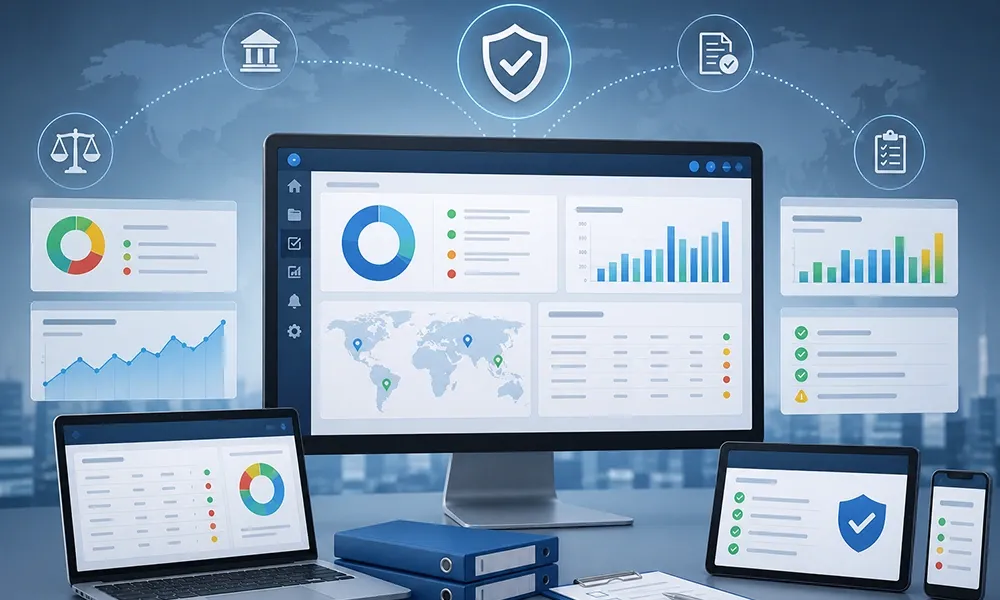
Compliance Management Software
Multi-Site-Building-Management-02

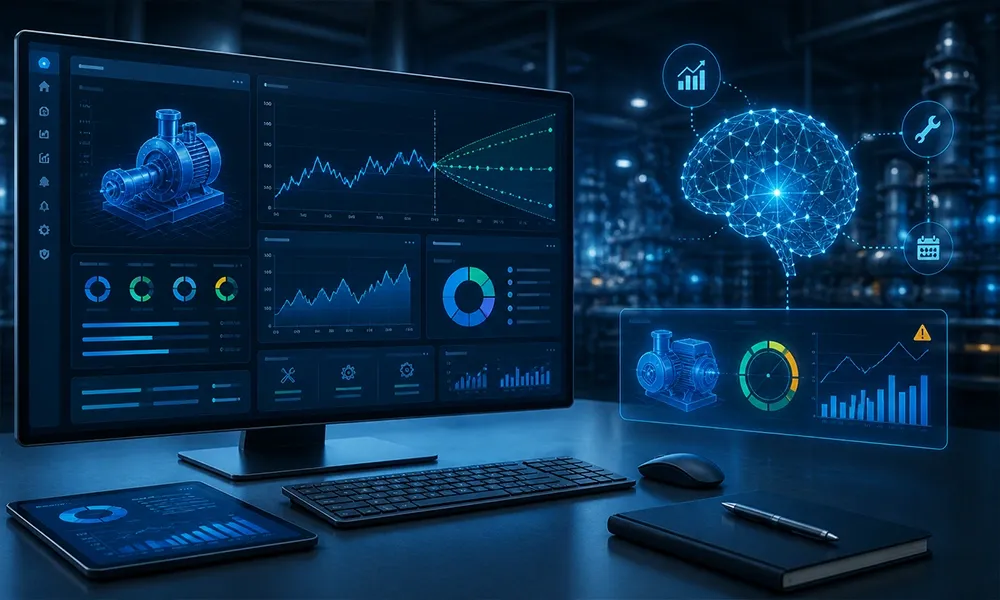
Predictive Analytics

Using data analytics and AI, organizations can predict maintenance needs and optimize resource allocation. This prevents costly breakdowns and reduces downtime.

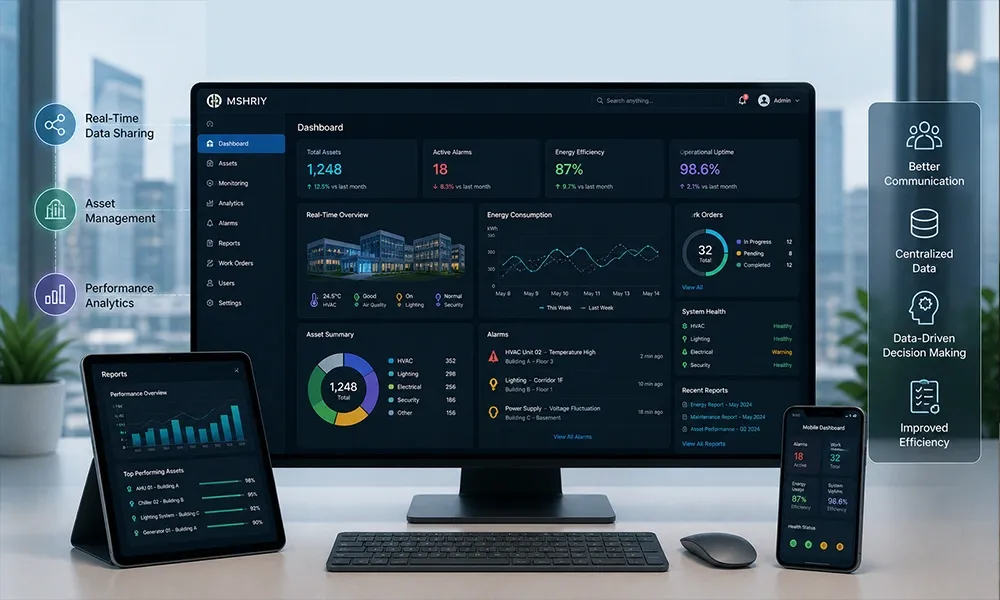
Integrated Software Platforms

Centralized software platforms offer real-time data sharing, asset management, and performance analytics. These systems allow for better communication and data-driven decision-making.

Integrated-Software-Platforms
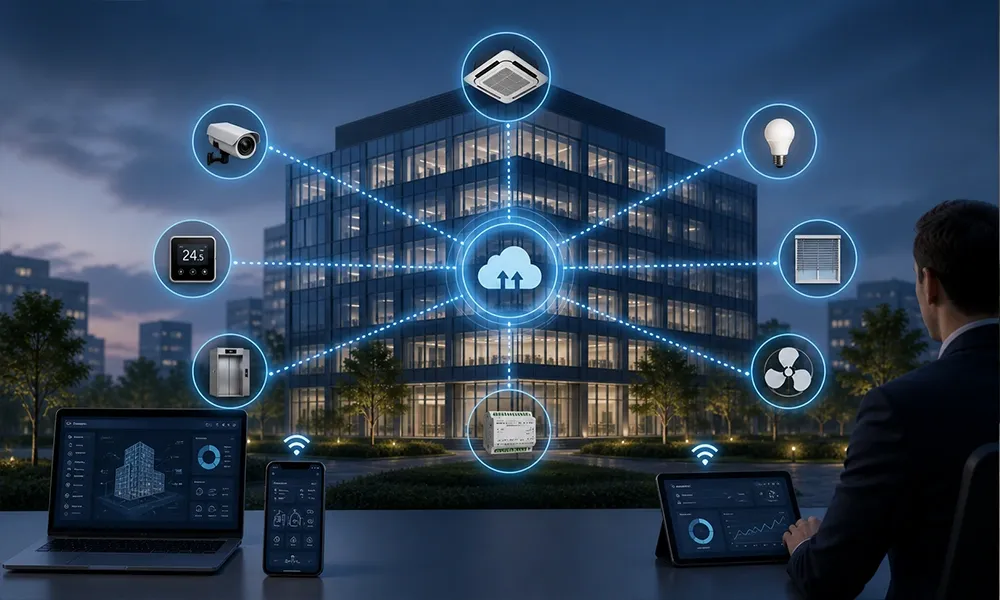
IoT and Automation

IoT and Automation

Internet of Things (IoT) devices and automation technologies help monitor and control various building systems remotely. This reduces the need for on-site personnel and improves resource efficiency.

Sustainability Initiatives

Many multi-site businesses are investing in sustainability measures, such as energy-efficient systems and waste reduction programs, which can be centrally managed for maximum impact.

Sustainability-Initiative

Multi-site building management is a critical aspect of modern business operations. It offers numerous advantages, including cost efficiency, operational excellence, and sustainability benefits. However, it comes with its set of challenges, particularly related to communication, data management, and resource allocation.

Fortunately, innovative solutions, such as integrated software platforms, IoT, predictive analytics, and sustainability initiatives, are transforming the way organizations manage their multi-site facilities. By embracing these technologies and best practices, businesses can achieve not only operational excellence but also contribute to a more sustainable and resilient future.
solution

CLEAN ROOM MONITORING SYSTEM

Clean Room Monitoring System

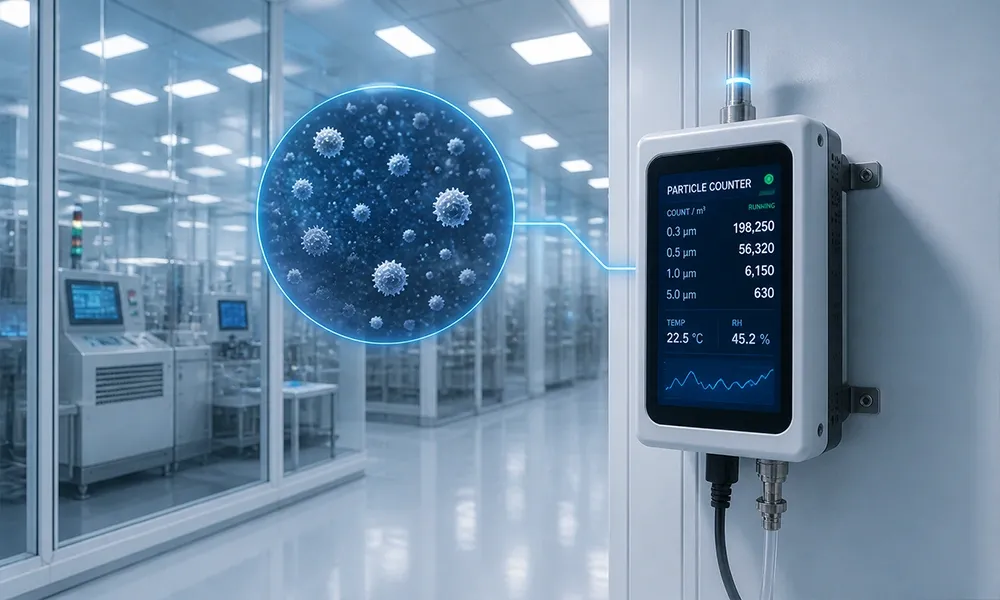
A Clean Room Monitoring System is a sophisticated setup designed to monitor and maintain the cleanliness and environmental conditions of a clean room or controlled environment. Clean rooms are essential in various industries such as semiconductor manufacturing, pharmaceuticals, biotechnology, aerospace, and research laboratories, where even tiny particles or contaminants can have severe consequences on the products being manufactured or research being conducted.

Clean Room Monitoring System Components

Particle Counters

These devices measure and monitor airborne particle concentrations in the clean room. They help ensure that the air quality remains within specified limits.

Particle-Counters
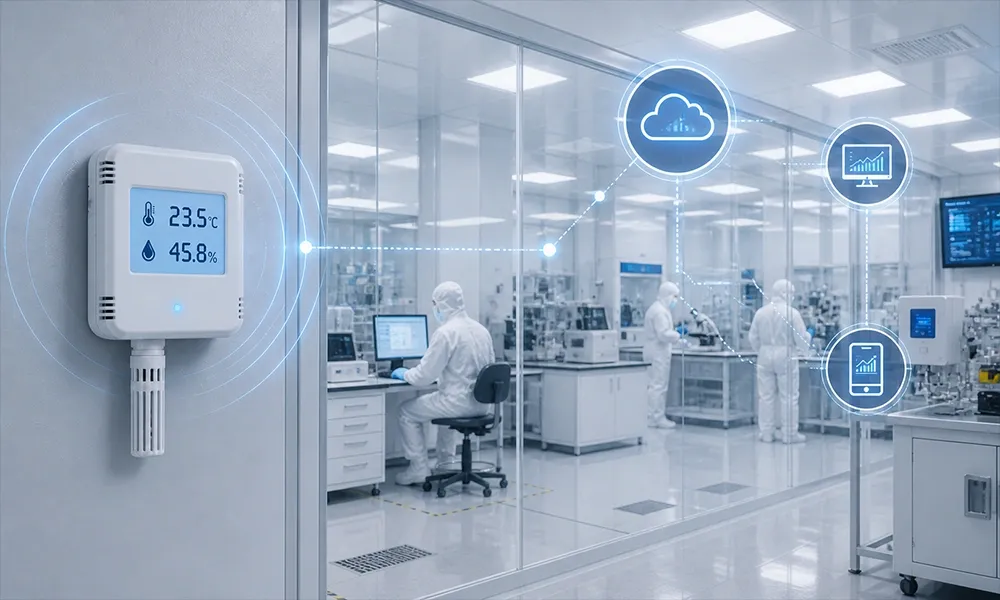
Temperature-and-Humidity-Sensors

Temperature and Humidity Sensors

Clean rooms often require specific temperature and humidity levels to be maintained. Sensors constantly monitor and maintain these conditions.

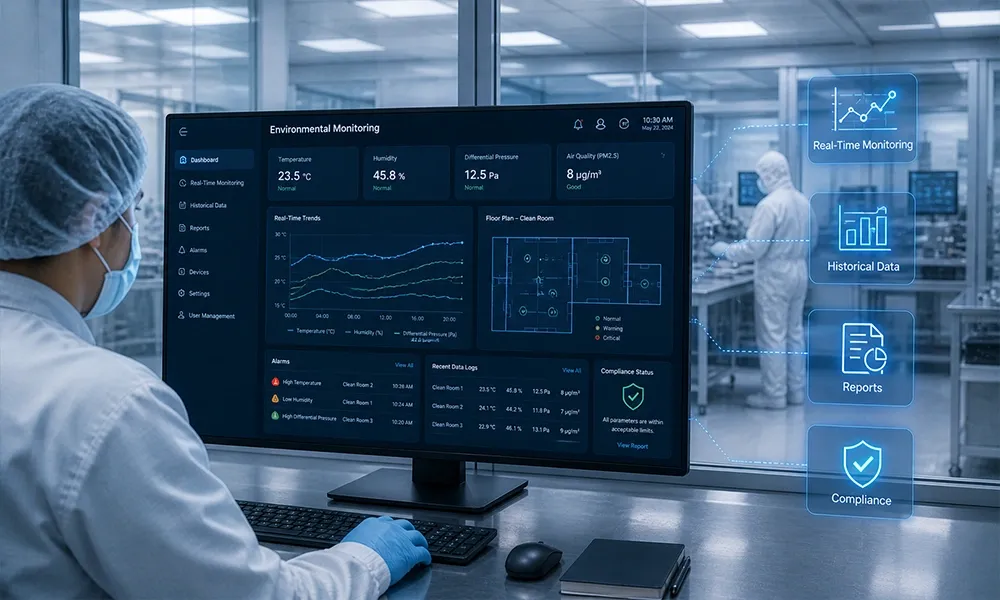
Environmental Monitoring Software

This software gathers and analyses data from various sensors, providing real-time monitoring and historical data for analysis and regulatory compliance.

Environmental-Monitoring-Software
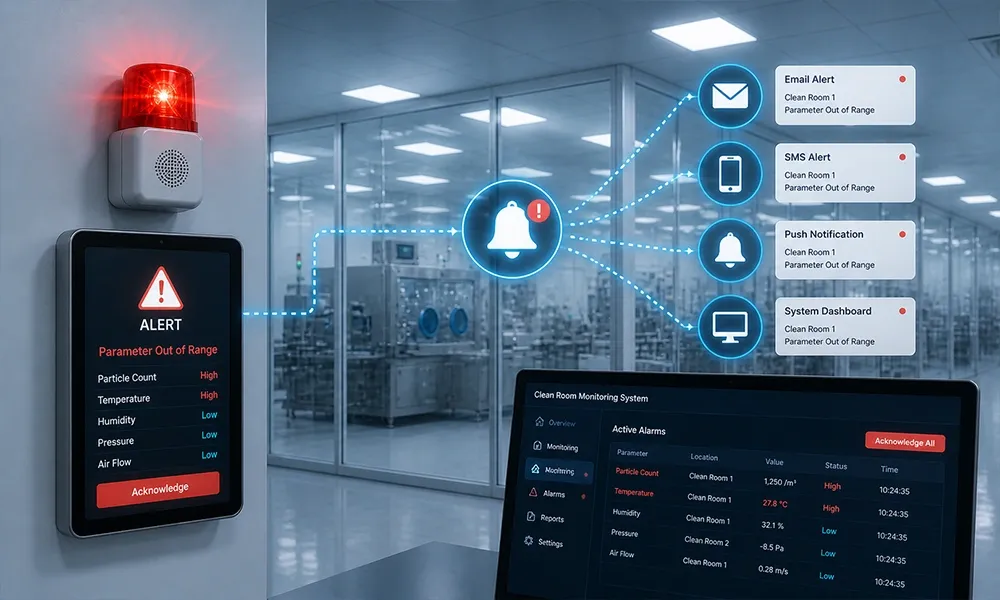
Alarms-and-Notifications

Alarms and Notifications

The system is equipped with alarms and notifications that alert personnel when any parameter deviates from the predefined acceptable range.

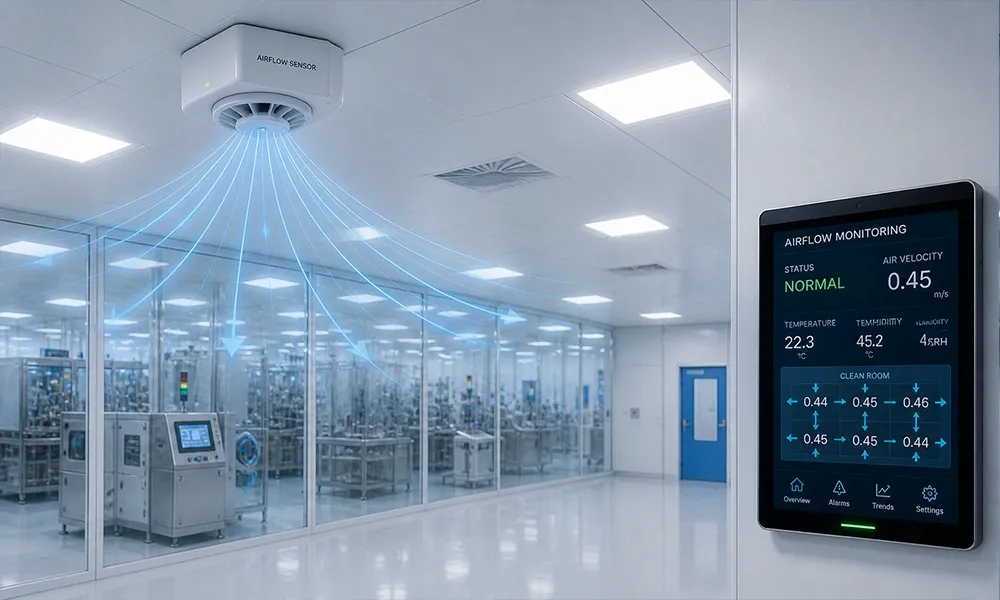
Airflow Sensors

These sensors ensure that the airflow within the clean room is uniform and consistent, preventing the accumulation of particles.

Airflow-Sensors
Differential-Pressure-Sensors

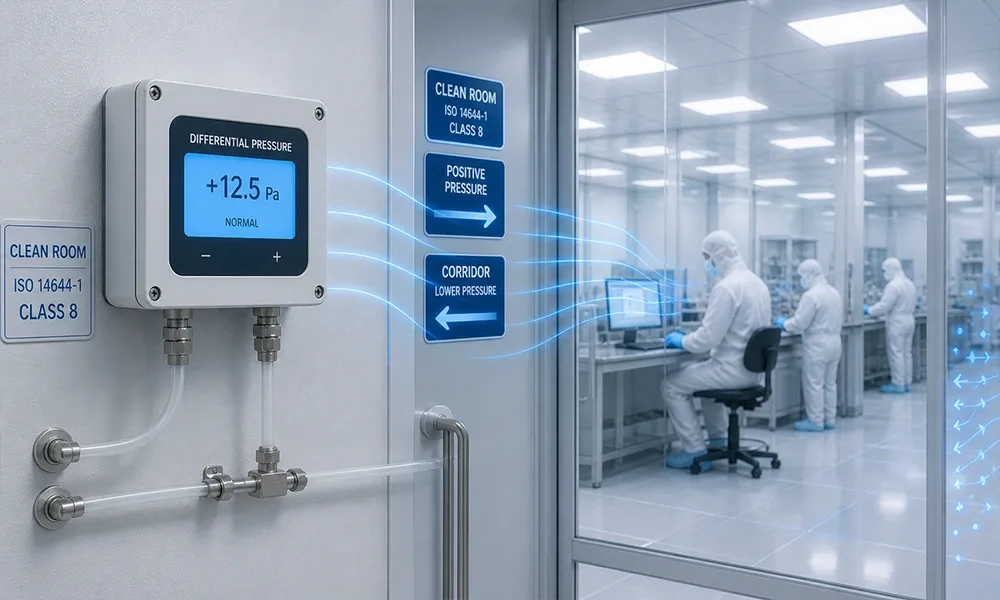
Differential Pressure Sensors

Differential pressure sensors monitor and control these pressure differences.This helps prevent contaminants from entering the clean room.

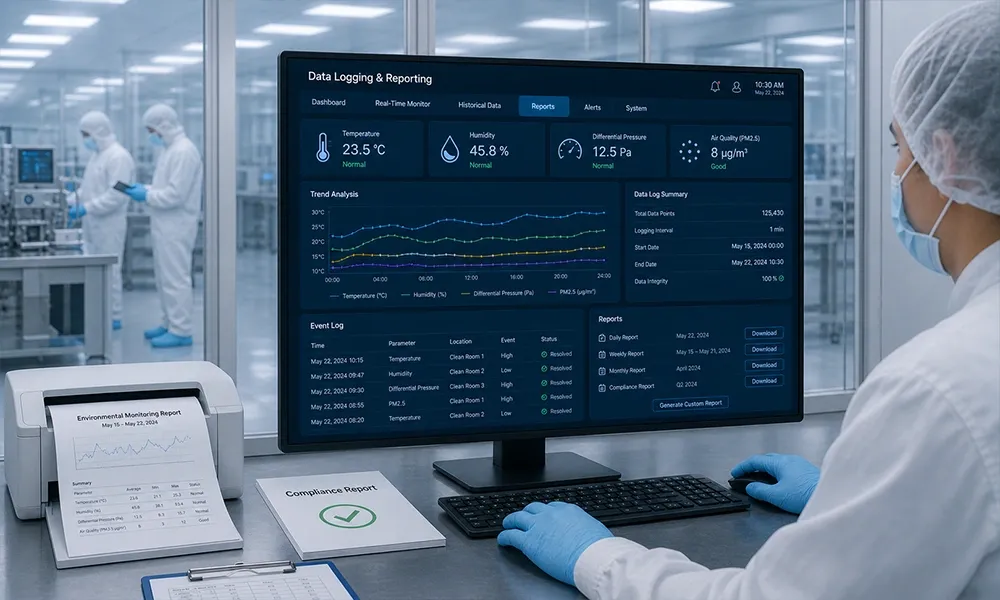
Data Logging and Reporting

The system logs all monitoring data, allowing for detailed analysis, trend identification, and compliance reporting.

Data-Logging-and-Reporting
Remote-Access

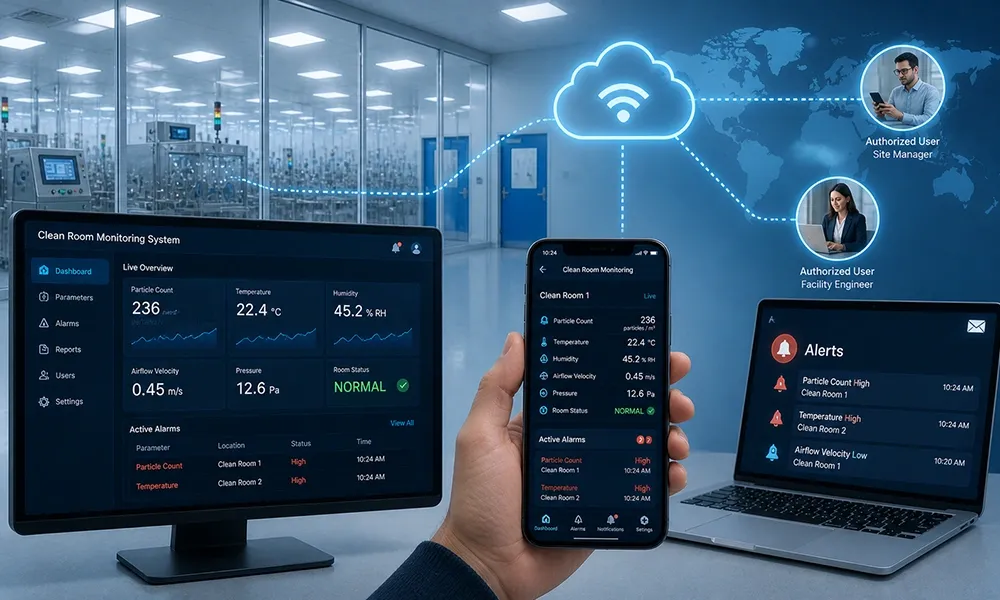
Remote Access

In some cases, the system may allow authorized personnel to access monitoring data and receive notifications remotely.

solution

LIGHTING CONTROL SYSTEM

Lighting Control System

A Lighting Control System is an automated setup that manages and regulates the lighting in various environments, such as homes, offices, commercial buildings, outdoor spaces, and industrial facilities. It aims to enhance energy efficiency, convenience, comfort, and safety by intelligently controlling when, where, and how lights are used.

Lighting Control System Components

Lighting Controllers

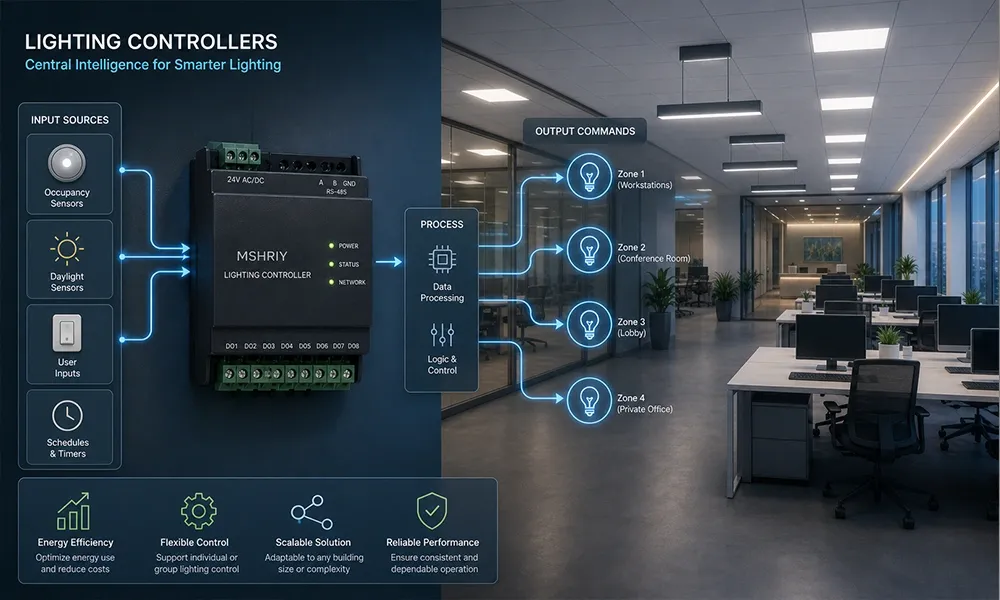
These are the central devices that govern the operation of the lighting system. They receive input from sensors or user inputs and send commands to individual or groups of lights accordingly.

Lighting-Controllers
Sensors

Sensors

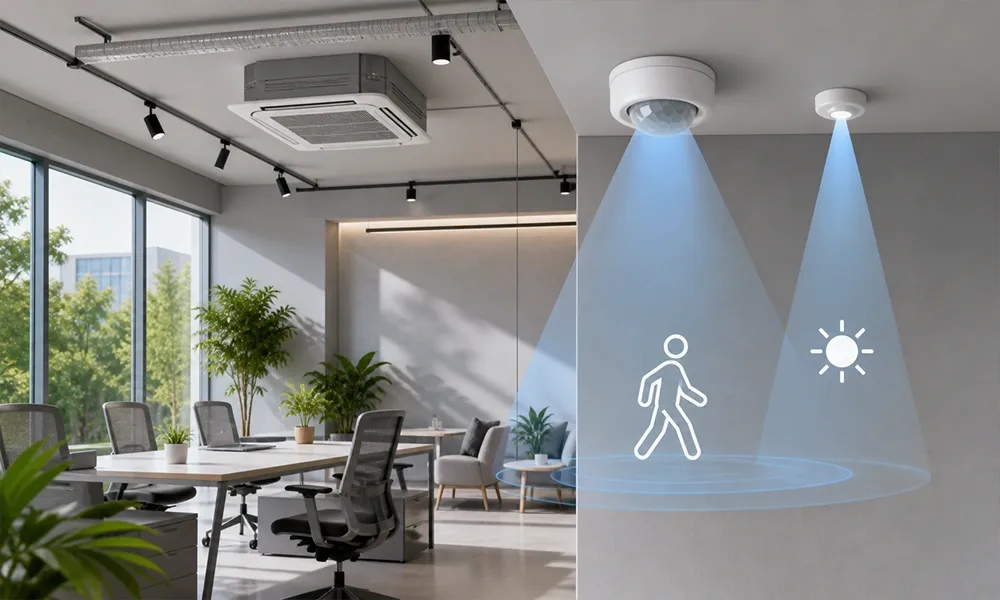
Sensors, such as occupancy sensors and daylight sensors, detect changes in the environment. Occupancy sensors detect human presence and activity in a space, while daylight sensors measure the amount of natural light available.

Integration with Smart Devices

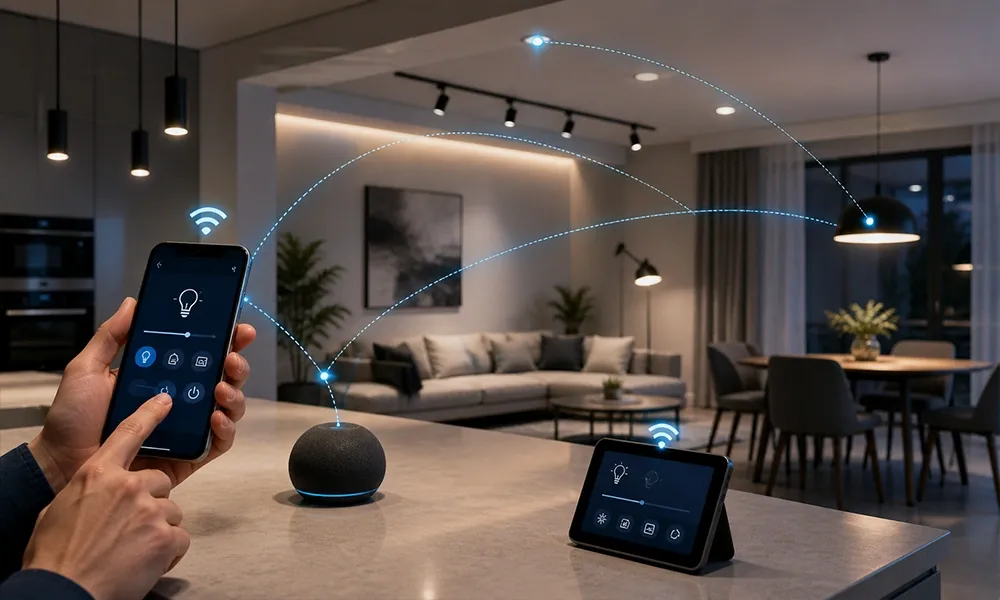
Modern lighting control systems can be integrated with smart devices such as smartphones, tablets, or voice assistants. This allows users to control the lights remotely or use voice commands for adjustments.

Integration-with-Smart-Devices
Centralized-Control-Software

Centralized Control Software

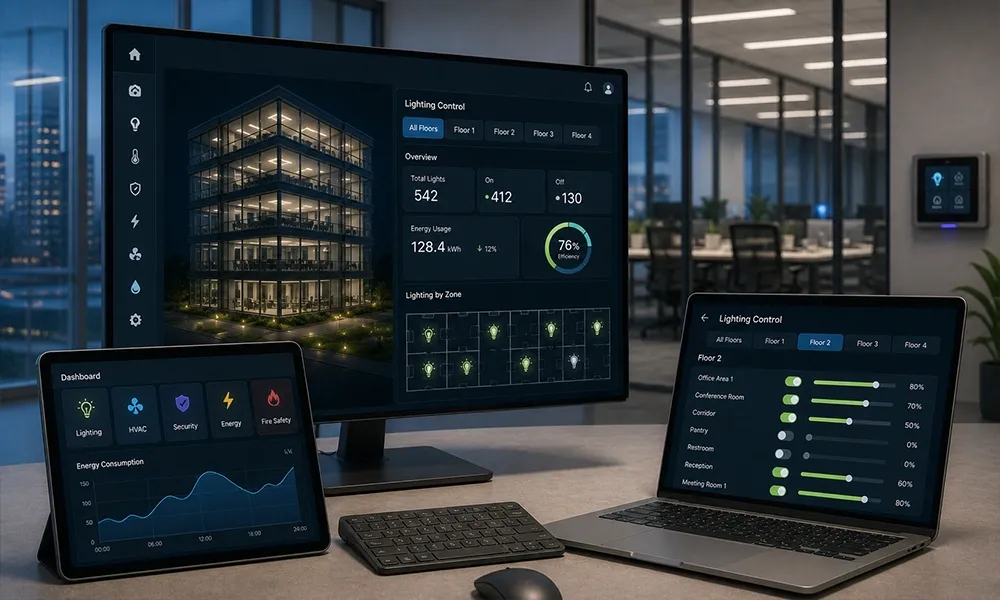
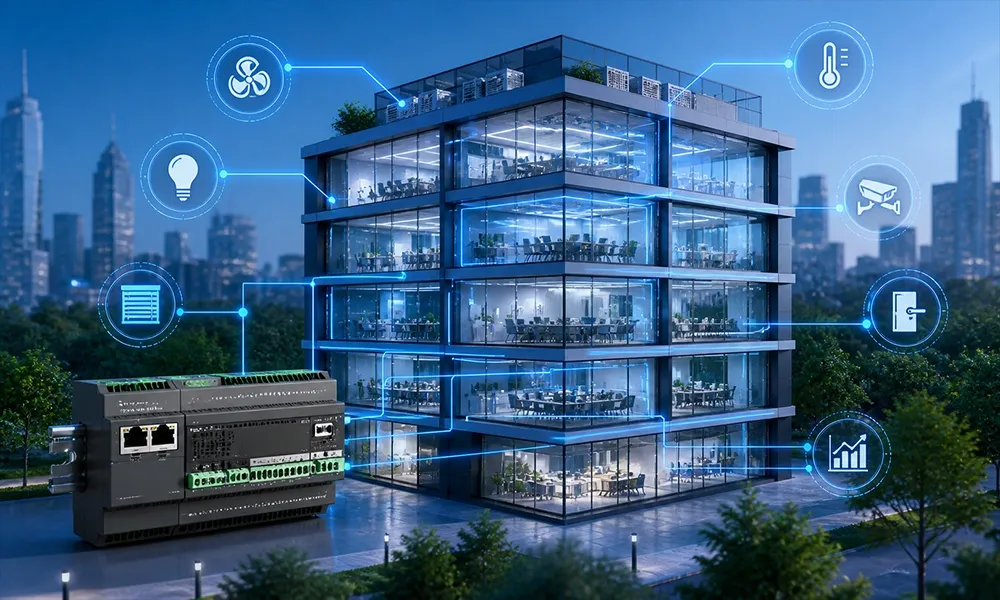
In more complex installations, a centralized software or Building Management System (BMS) is used to manage lighting along with other building systems, offering a comprehensive control platform.

Dimmers

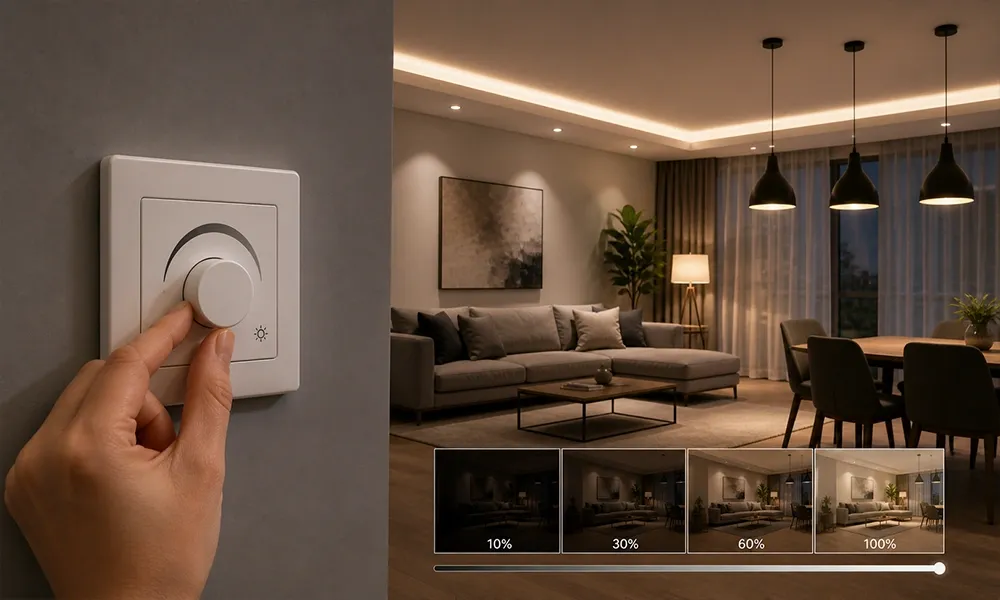
Dimmers allow users to control the brightness of lights. They can be manual (wall-mounted knobs or sliders) or digital (integrated into the control system).

Dimmers
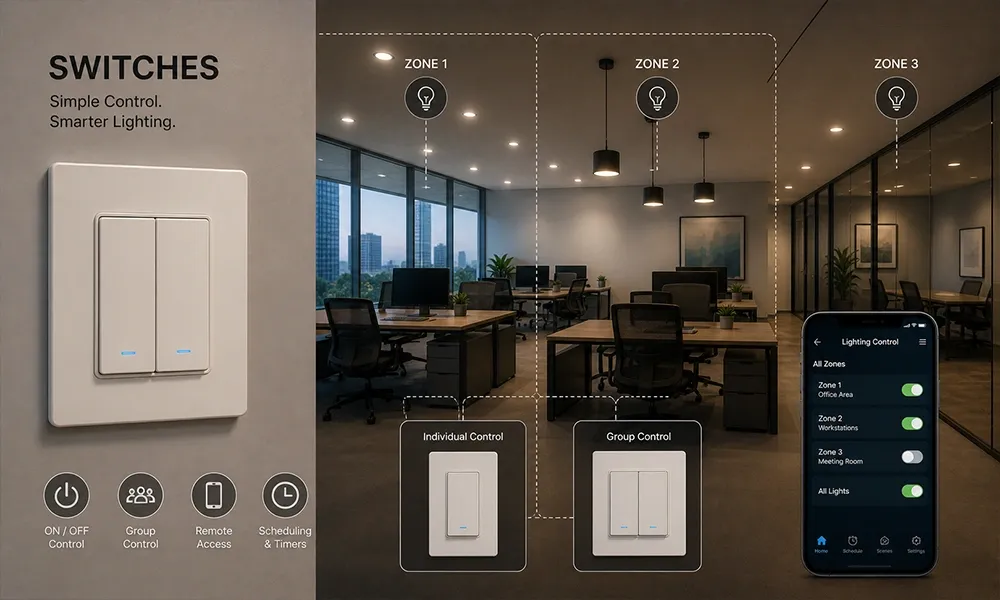
Switches

Switches

Switches offer basic on/off control for individual or groups of lights. In some cases, smart switches may be used, which can be remotely controlled or programmed.

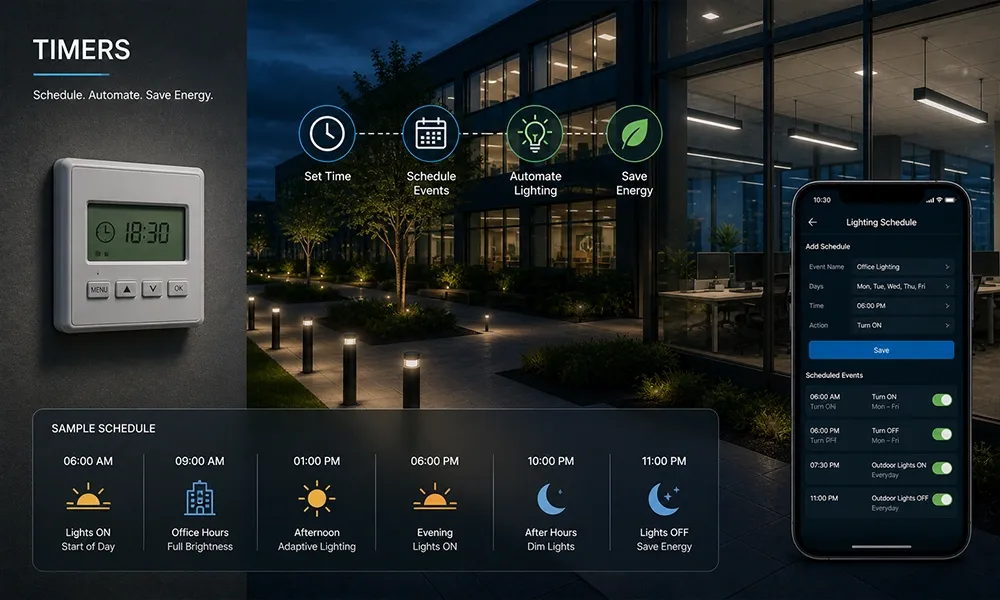
Timers

Timers enable the scheduling of lighting events. This is particularly useful for outdoor lighting or for automating lighting in offices and commercial buildings based on operating hours.

Timers
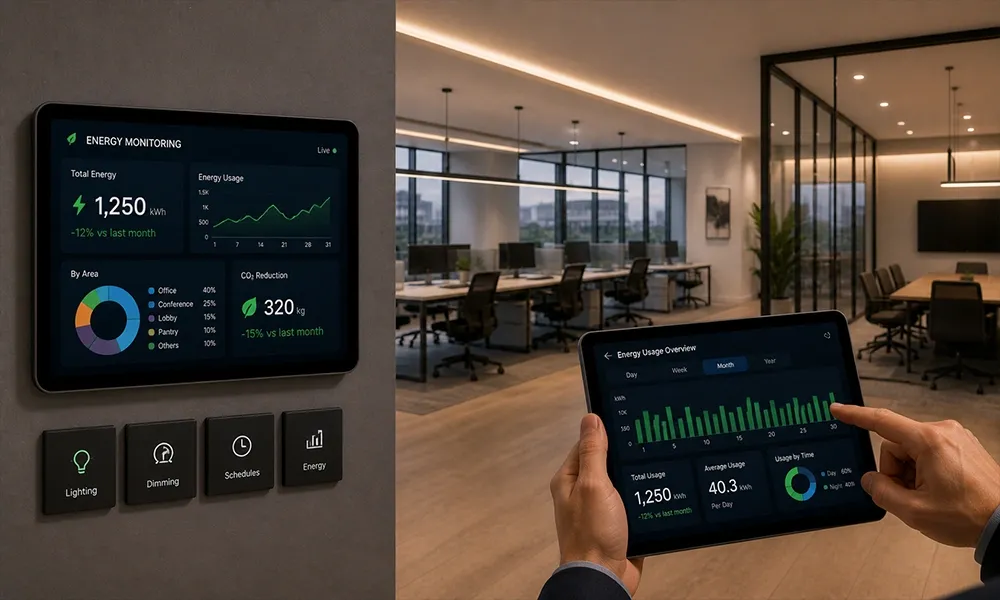
Energy-Monitoring

Energy Monitoring

Some advanced systems provide energy monitoring features, allowing users to track their lighting-related energy consumption.

Benefits of a Lighting Control System

Energy Savings

By optimizing lighting usage and automatically turning off lights when not needed, energy consumption can be significantly reduced.

Enhanced Comfort

Automated lighting adjustments based on occupancy and natural light levels provide a more comfortable and user-friendly experience.

Improved Safety and Security

Lighting control can enhance security by automatically turning on lights in response to motion detection or integrating with security systems.

Longer Bulb Lifespan

Dimming and adjusting lighting levels can extend the life of bulbs, reducing maintenance costs.

Flexibility and Customization

Users can tailor the lighting environment to their preferences and needs.

Environmental Impact

Lower energy consumption contributes to reducing the overall environmental footprint.

Overall, a Lighting Control System offers convenience, efficiency, and improved lighting management, making it a valuable addition to various residential, commercial, and industrial spaces.